What is Earthworks Testing?
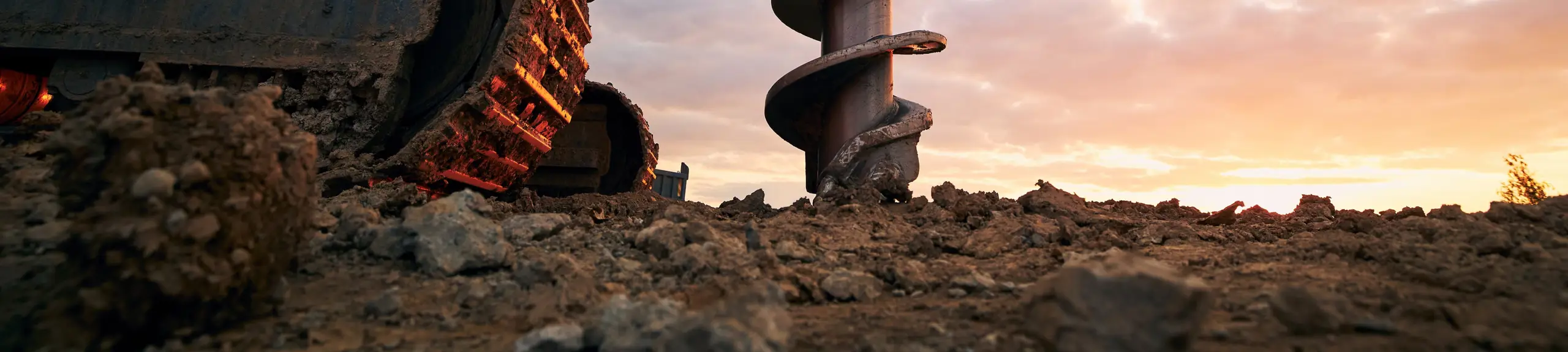
Earthworks testing plays an important role in site construction. The primary focus is on the intricate process known as 'cut and fill.' ‘Cut and fill’ activity is an important step in site construction projects and is frequently required to create a level and stable platform for development. The goal is to ultimately use existing materials to avoid shipping out or bringing in by bulk to reduce costs and limit the works environmental impact.
Earthworks testing is imperative to assess the soils composition, bearing capacity, and structural integrity to determine their suitability for use in project.
* For a full list of our UKAS-accredited activities, please visit our Accreditations and Industry Standards

Have a Question?
Let’s Find What You Need
Earthworks Site Testing
Whether traditional earthworks, stabilised or modified, CTS delivers a comprehensive range of tests to support improved decision-making around earthworks’ suitability, classification, design, and control.
Our on-site earthworks testing enables certification in areas of construction, saving both time and money and providing a cost-effective solution.
Earthworks Site tests include:
- California Bearing Rate (CBR)
- Soil stiffness modulus (LWD Techniques)
- Moisture Condition Value (MCV)
- In-situ shear strength
- Sampling of earthworks materials from pits, laid materials, or stockpiles
- In-situ density testing including nuclear density meter surveys
- In-situ settlement and bearing capacity by plate bearing techniques
- Dynamic Cone Penetrometer (DCP)
Earthworks Laboratory Testing
Civil engineering and building works are all dependent on ground conditions and their correct interpretation for a project’s success. A well-executed program of soils testing based on thorough geotechnical investigation is fundamental to any design and subsequent construction works.
Earthworks laboratory testing is undertaken in-house and compliments our site services.
Earthworks Laboratory tests include:
- Particle size distribution
- Moisture content analysis
- As received or intact density
- Plasticity index classification testing
- Particle density
- California Bearing Rate (CBR)
- Moisture Condition Value (MCV)
- One-dimensional consolidation properties
- IDD of chalk and chalk crushing value
- Shear strength (Triaxial and Shear Box)
- Compaction studies (2.5kg, 4.5kg, and vibrating hammer)
Why Choose CTS for Earthworks Testing?
At CTS we pride ourselves on consistently delivering high-quality on-site and laboratory earthworks testing that enables our clients to meet their compliance obligations and continue with projects safely and without delay.
To find out more about our earthworks testing services, please get in touch with a member of the CTS team today, and we’ll be more than happy to answer any questions you may have regarding our services and how we can help you.
Acceptable Earthworks Materials
To apply the performance requirements set out in SHW CC 601 (Series 600), earthworks materials are first classified according to their intended use and physical characteristics. This classification helps engineers determine where a material can be used within a highway scheme and what level of testing is required to demonstrate compliance.
General fill
- 1A – Well graded granular material
- 1B – Uniformly graded granular material
- 1C – Coarse granular material
- 2A – Wet cohesive material
- 2B – Dry cohesive material
- 2C – Stony cohesive material
- 2D – Silty cohesive material
- 2E – Reclaimed pulverised fuel ash cohesive material
Starter layer
- 6B – Selected coarse granular material
- 6C – Selected uniformly graded granular material
- 6D – Selected uniformly graded granular material (below pulverised fuel ash)
Gabion filling
- 6G – Selected granular material
Drainage layer to reinforce soil and anchored earth structures
- 6H – Selected granular material
Lower bedding for corrugated steel buried structures
- 6K – Selected granular material
Surround to corrugated steel buried structures
- 6M – Selected granular material
Capping
- 6F1 – Selected granular material, fine grading
- 6F2 – Selected granular material, coarse grading
- 6F3 – Selected granular material
- 6F4 – Selected granular material, fine grading
- 6F5 – Selected granular material, coarse grading
- 6E – Selected granular material for stabilisation with cement
- 6R – Selected granular material for stabilisation with lime and cement
- 7E – Selected cohesive material for stabilisation with lime
- 7F - Selected silty cohesive material for stabilisation with cement
- 7G – Selected conditioned pulverised fuel ash cohesive material for stabilisation with cement
- 7I – Selected cohesive material for stabilisation with lime and cement
- 9A – Cement stabilised well graded granular material
- 9B – Cement stabilised silty cohesive material
- 9C – Cement stabilised conditioned pulverised fuel ash cohesive material
- 9D – Lime stabilised cohesive material
- 9E – Lime and cement stabilised cohesive material
- 9F – Lime and cement well graded granular material
Below water
- 5A – Selected well graded granular material
Topsoiling
- 5A – Topsoil or turf, existing site
- 5B – Imported topsoil, complying with BS 3882
Filter layer below subbase
- 6S – Selected well graded granular material
Fill to reinforced soil
- 7C – Selected wet cohesive material
- 7D – Selected dry cohesive material
Fill to structures and reinforced soil
- 7B – Selected conditioned pulverised fuel ash cohesive material
Overlying fill for corrugated steel buried structures
- 7H – Wet, dry, stony or silty cohesive material and chalk
Fill to landscape
- 4A – Various materials used as fill to landscape areas
Fill to reinforced soil and anchored earth structures
- 6I – Selected well graded granular material
- 6J – Selected uniformly graded granular material
Upper bedding for corrugated steel buried structures
- 6L – Selected uniformly graded granular material
Fill to structures
- 6N – Selected well graded granular material
- 6P – Selected granular material
- 6Q – Selected granular material
- 7A – Selected cohesive material
Lower trench fill
- 8 – Class 1, Class 2 and Class 3 materials
Our other material testing services:



Request a Quote
Frequently Asked Questions
What are earthworks?
Earthworks are engineering operations involving the excavation, movement, processing, and placement of soil or unformed rock to prepare land for construction. Typically carried out through cut and fill operations, earthworks create stable, level platforms for development while maximising the reuse of site-won materials wherever possible.
What is cut and fill in earthworks?
Cut and fill is the process of excavating material from one area of a site (“cut”) and using it to raise or level another area (“fill”). This approach helps create stable development platforms while reducing the need to import or dispose of large volumes of material.
What does earthworks include?
Earthworks include the classification, excavation, remediation, and testing of materials to assess their suitability for re-use on-site. This can involve site investigation, soil analysis, and a range of laboratory and in-situ testing, including density, moisture content, shear strength, and bearing capacity assessments. Comprehensive earthworks testing helps ensure materials meet specification requirements and that the ground is suitable for safe, compliant construction.
What is earthwork support?
Earthwork support refers to the systems and engineering controls used to maintain the stability of excavations and surrounding ground during construction activities. These measures are designed to prevent ground movement or collapse, particularly in unstable or cohesive soils, while protecting both site personnel and adjacent structures.
Do you need planning permission for earthworks?
Planning permission requirements for earthworks depend on the scale, location, and nature of the proposed works.
Minor landscaping or agricultural activities may not require approval; larger earthworks projects – particularly those affecting site levels, drainage, highways, or neighbouring land – will often require consent from the local planning authority.
For commercial developments and large-scale groundworks, early consultation and comprehensive site investigation are recommended to ensure compliance with planning, environmental, and engineering requirements.
Can excavated materials be reused on-site?
In many cases, excavated materials can be processed, tested, and reused on-site, provided they meet the required engineering and environmental standards. Reusing site-won materials can significantly reduce disposal costs, minimise imported material requirements, and improve the overall sustainability of a project.
Related Articles

Understanding Earthworks Testing
Understanding Common Tests Associated with Earthworks Testing in the UK

Earthworks Testing: On Site vs. Lab-Based Soil Test Methods
Learn the key differences between on-site and lab earthworks testing. Discover how to test soil composition, bearing capacity, and select the best testing solutions for your construction project.